The Data on Data Centers
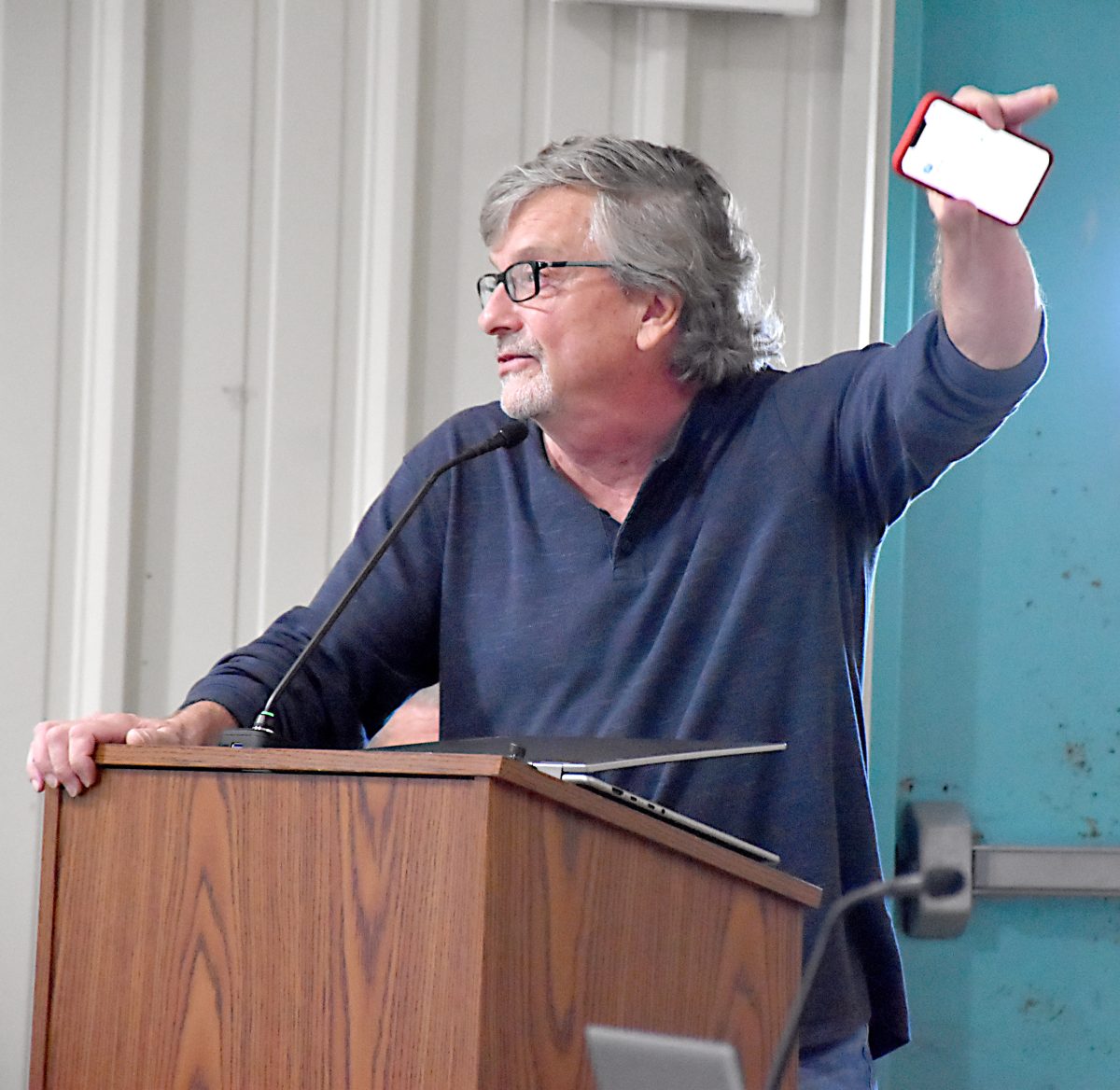
DATA CENTER INFO – Kingsley Brock, Director of Economic Development, presented County Commissioners and members of the public with information on data centers, breaking down the differences between those facilities and Bitcoin mining operations, as well as the economic impact that a data center would bring to the county, city and school district should one be built in the future. Brock said that while Bitcoin mines only benefit the owner and the utility it purchases electricity from, data centers are a necessity for all online activity and their tax revenues would be “life changing” for cities with suitable industrial park sites. Photo by Logan Watson.
The Data on Data Centers
Brock gives insight to County Commission
By Logan Watson
A vehement pushback by citizens of Milan caused the Milan Planning Commission to rescind its favorable recommendation to rezone 6.2 acres of land in the Hughes Loop area for a 15-megawatt Bitcoin mining and data center facility last month, but the issue was still a hot topic at last Monday’s meeting of the Gibson County Commission.
The matter had been scheduled to appear on the agenda for the Commission’s November 9 meeting but was removed after losing support from the city and County Commissioners. Citizens from the area still spoke out during the meeting with concerns about the noise, decreased property values and strain on resources and infrastructure.
“We moved to the area because it was the quiet, rural area that I grew up in,” one man told the Commissioners. “They became interested in my neighborhood because it was cheap for them, not because it was going to benefit you, me or anybody in this room. They were looking out for themselves and they’re going to reach into our pockets by making my house worth less. That goes not just for my neighborhood, but for everybody in this room’s neighborhoods.”
One woman asked the Commissioners to consider a moratorium on rezoning agricultural areas to industrial to accommodate Bitcoin mining operations or data centers until more information about the possible negative impact could be obtained. Another asked for more consideration, including open and honest lines of communication, for the people around such proposed sites in the future and keeping industrial sites ‘where they should be.”
Several speakers experienced problems with the microphone during the public comment period. County Mayor Nelson Cunningham stated that the microphone would be replaced for the next meeting in January.
In an effort to be transparent and open, Director of Economic and Community Development Kingsley Brock presented a report on basic information on data centers and their economic impact on the community that he had compiled since the last Commission meeting.
“Data centers are the most contentious and emotional issue I have seen in my 25 years of economic development work,” Brock said. “This presentation is the most important information, I believe, I will have shared with you in my 13 years of working in Gibson County.”
Brock said that he had spent “well over 100 hours” investigating the positives and negatives of data centers, coming to the conclusion that, while data centers may not be something that everyone wants near their homes or schools, they are something that everyone uses and benefits from.
All online activity, from social media and gaming to shopping and searches, requires data centers, but not all of those data centers are huge, sprawling sites.
Brock noted that while he was caught off guard by the Bitcoin mining facility in Humboldt, he was not opposed to it. The small, two-acre facility would provide revenue for the Humboldt Utility Authority, allowing the utility to keep costs down for residents and businesses.
“I wasn’t involved and I didn’t need to be,” Brock said. “Then all the data center stuff came up and we all got caught off guard. I was caught off guard. That’s my fault as Economic Developer, but I won’t get caught off guard again.”
The Humboldt Bitcoin mining facility will use 15 megawatts of electricity, roughly the same as a large industrial operation or 10,000 average homes, and generate close to $54,000 in property taxes during the first year. According to Brock’s research, Bitcoin operations can be loud and can shut down or move if Bitcoin prices fall.
Data centers, on the other hand, like the 2.4mw, 52,000 square foot TierPoint data center that Brock visited in Franklin, are engineered to control noise and need to be in close proximity to a substation. They also use closed-loop or air cooling, which reduces the amount of water needed to cool the servers. Brock noted that the county or municipality can control those factors with zoning conditions, going so far as to play an audio recording he made from outside the fence of the TierPoint facility.
“If we land one of these, or even want one of these, they would be in industrial parks,” Brock said.
He added that a five-megawatt data center could also bring in close to 10 times more tax revenue than the Humboldt Bitcoin mine in the first year with a $50M initial investment as opposed to the $6M investment in Humboldt. A 15mw data center would bring in more than $1.5M in tax revenue in the first year.
“If a data center invests $150M in a project, that’s 15 $10M manufacturing plants,” Brock said. “It would take me 25 years to land 15 manufacturing plants.”
Following his presentation, Brock fielded questions from members of the public who asked about power usage and costs for residents, noise and sites that would be suitable for data centers.
“If we want to look at [data centers], we can take each concern one by one and address them and put things in place that protect us on the front end,” Brock said.
Brock’s full presentation is available on the Gibson County Economic Development website at www.gibsoncountytnecd.com. A video of Brock’s presentation, and the rest of the County Commission meeting, is available on the Trenton Gazette’s Facebook page.
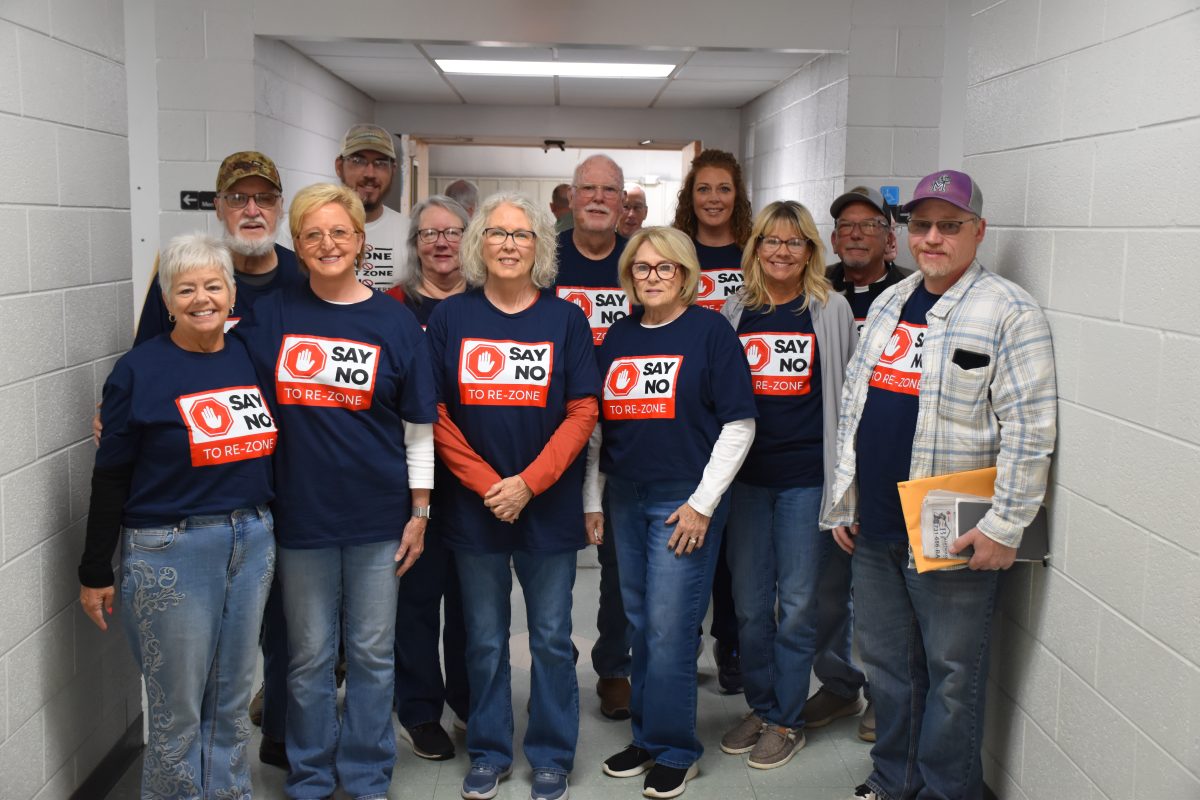
NOT IN OUR BACK YARD – After successfully defending an area near their neighborhood from being rezoned for a data center, Hughes Loop residents and supporters urged County Commissioners to keep Bitcoin mining facilities and data centers “where they belong” – away from homes and agricultural land. Photo by Logan Watson.