Humboldt Board of Mayor and Aldermen votes in favor of the 2026-27 fiscal year, includes property tax increase
 by Shane Wofford
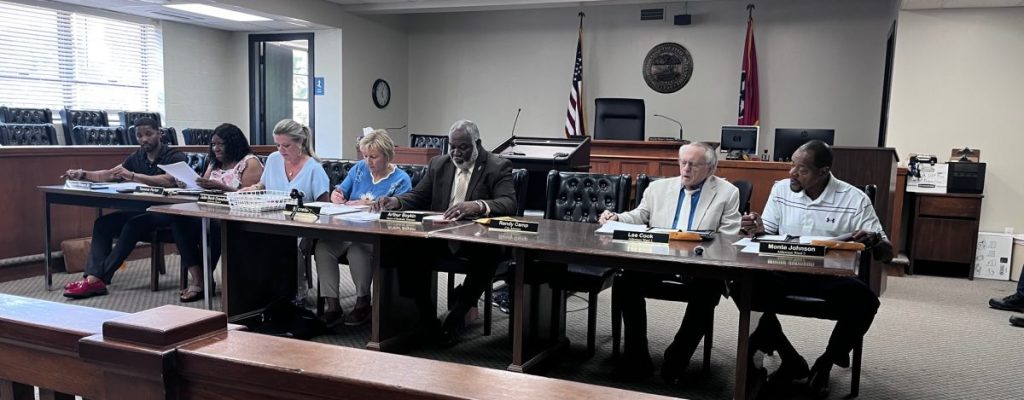
The Humboldt Board of Mayor and Aldermen approved the first reading of the city’s proposed 2026-27 budget Monday night, advancing a spending plan that includes a 15-cent increase in the city’s property tax rate per $100 assessed value, while also approving several other measures ranging from zoning changes to public safety updates.
The proposed budget, which covers the fiscal year beginning July 1, now moves forward for a required second reading before becoming official. Mayor Arthur Boykin acknowledged the tax increase was not an easy decision but said city officials believed it was necessary after months of reviewing departmental requests and reducing spending.
“If we adopt this ordinance, we are adopting a 15-cent per $100 tax increase,” Boykin told the board during the meeting. It is the first increase in property taxes for Humboldt residents in well over a decade.
At a previous meeting of the board in April, the mayor estimated that the increase would generate roughly $350,000 annually for city operations and infrastructure needs.
During that meeting, Boykin noted Humboldt currently has the second-lowest property tax rate among nine municipalities in Gibson County, at $1.875. He outlined the potential financial impact for homeowners, estimating the increase would cost about $18.94 annually for a $50,000 home and $75.75 annually for a $200,000 home. He said the additional revenue would help fund needs such as a new fire engine, road paving, and sidewalk repairs.
“This is about doing some things differently,” Boykin said during the April meeting. “You’ve told us you want things done better, and that’s going to come with a price.”
Elsewhere, city leaders were said to have spent weeks trimming departmental budgets before arriving at the proposal. Boykin said approximately $1.2 million was cut from initial budget requests in an effort to balance the city’s finances while continuing to provide essential services.
The mayor explained that department heads were asked to make difficult sacrifices, including scaling back capital purchases. Boykin noted that while departments initially requested equipment and other expenditures, the city’s financial position required officials to prioritize maintaining staffing levels.
“We were not in a position to grant 3 percent raises,” Boykin said.
Rather than providing a uniform percentage increase for every employee, Boykin said the city instead directed available funding toward increasing wages for its lowest-paid employees. He said the city determined a traditional 3 percent raise across all departments would have cost well over $140,000. Instead, officials redistributed those funds in an effort to raise starting wages while providing smaller increases to higher-paid employees.
“It is, to me, in 2026, to have people working for $10.20 an hour, you’re not going to keep them,” Boykin said. “You get $10.20-an-hour workers.”
The mayor added that improving compensation, particularly within the police and fire departments, remains one of his long-term priorities.
“I don’t like revolving doors,” Boykin said while discussing employee turnover. “If God gives me another year, my attention is turning to the fire department and the police department.”
Following discussion, the board unanimously approved the budget’s first reading. The second reading was approved at a special called meeting on June 30.